The New Frontier: Navigating Rising Industries and Their Talent Pools in 2026
The landscape of work is in constant motion, but the pace of change has accelerated exponentially. As HR leaders, our mandate isn’t just to fill roles, but to strategically build the workforce of tomorrow. This means keeping a keen eye on emerging industries and understanding the unique characteristics of their talent pools.
Forget the old playbooks for a moment. In 2026, several sectors aren’t just growing—they’re exploding, creating new demands for specialized skills and shifting how we think about attraction, engagement, and retention.
1. The Green Economy & Renewable Energy 🌳💡
The Rise: Driven by global climate initiatives, consumer demand, and technological advancements, the green economy encompasses everything from renewable energy generation (solar, wind, geothermal) to sustainable manufacturing, carbon capture, and eco-friendly infrastructure development.
The Talent Pool:
- Diverse Skill Sets: This isn’t just about engineers. We’re seeing demand for:
- Renewable Energy Engineers (electrical, mechanical, civil)
- Environmental Scientists & Consultants
- Project Managers with large-scale infrastructure experience
- Data Analysts specializing in energy grid optimization
- Supply Chain Specialists for sustainable materials
- Policy & Regulatory Experts
- Skilled Trades (solar panel installers, wind turbine technicians)
- Motivations: Candidates in this space are often mission-driven, seeking roles with purpose and a tangible impact on the planet. They value sustainability in company culture and operations.
- Attraction Strategies: Highlight your company’s ESG (Environmental, Social, and Governance) commitments, showcase real-world impact, and emphasize opportunities for innovation. Partner with vocational schools and universities offering green tech programs.
2. Artificial Intelligence (AI) & Machine Learning (ML) Everywhere 🤖📊
The Rise: AI and ML are no longer confined to tech giants; they are the underlying fabric transforming nearly every industry, from healthcare and finance to retail and manufacturing. We’re seeing a surge in demand for AI-driven automation, predictive analytics, and personalized experiences.
The Talent Pool:
- Highly Specialized & Competitive: This is one of the most competitive talent pools globally. Key roles include:
- AI/ML Engineers & Researchers
- Data Scientists (with strong ML expertise)
- MLOps Engineers (DevOps for Machine Learning)
- Prompt Engineers (an emerging role for optimizing AI interactions)
- AI Ethicists & Governance Specialists
- UX Designers for AI-powered interfaces
- Motivations: These professionals are driven by intellectual challenge, cutting-edge technology, and the opportunity to build transformative products. They expect competitive compensation, continuous learning opportunities, and access to advanced tools and data.
- Attraction Strategies: Offer challenging problems, invest in state-of-the-art infrastructure, promote a culture of innovation and research, and offer robust learning and development pathways. Consider hackathons and sponsoring AI conferences.
3. Cybersecurity & Digital Trust 🔒🌐
The Rise: With increasing digitalization comes an exponential rise in cyber threats. Cybersecurity has evolved from an IT concern to a fundamental business imperative. This industry is expanding to cover everything from endpoint protection and cloud security to identity management, data privacy, and national critical infrastructure defense.
The Talent Pool:
- Critical Scarcity & High Demand: The cybersecurity skills gap is persistent and growing. Roles include:
- Security Analysts & Engineers (SOC, Cloud, Network, Application)
- Incident Responders
- Penetration Testers (Ethical Hackers)
- GRC (Governance, Risk, Compliance) Specialists
- Identity & Access Management (IAM) Professionals
- Security Architects
- Motivations: Beyond competitive pay, cyber professionals are driven by the challenge of outsmarting adversaries, the importance of protecting vital assets, and continuous skill development. They often value robust security cultures within their own organizations.
- Attraction Strategies: Highlight your commitment to cybersecurity, offer pathways for advanced certifications (e.g., CISSP, CISM), provide access to real-world threat intelligence, and promote a culture of continuous learning and problem-solving. Consider “upskilling” existing IT talent.
4. Advanced Manufacturing & Robotics ⚙️🤖
The Rise: Industry 4.0 is maturing, integrating AI, IoT, and robotics into manufacturing processes. This isn’t just about automating assembly lines; it’s about smart factories, predictive maintenance, custom manufacturing, and advanced materials science.
The Talent Pool:
- Blended Skills: This space requires a blend of traditional engineering, IT, and operational technology (OT) skills. Look for:
- Robotics Engineers & Technicians
- Automation Engineers
- Industrial IoT (IIoT) Specialists
- Mechatronics Engineers
- Data Scientists for predictive maintenance and quality control
- Advanced Materials Scientists
- Skilled Trades with digital literacy
- Motivations: Professionals here are often fascinated by tangible innovation, efficiency gains, and working with cutting-edge hardware and software. They value environments that foster continuous improvement and technological advancement.
- Attraction Strategies: Showcase your innovation in manufacturing, highlight career paths from technician to engineer, invest in apprenticeship programs, and emphasize the impact of their work on product quality and efficiency.
Key Takeaways for TA & Hiring Managers:
- Skills-First is Paramount: Degrees are foundational, but certifications and demonstrable skills are the true currency in these rapidly evolving sectors.
- Source Beyond Traditional Channels: Look at bootcamps, online learning platforms, open-source communities, and industry-specific forums.
- Invest in Upskilling & Reskilling: The talent you need might already be within your organization, ripe for development into these new roles.
- Craft Compelling Employer Value Propositions (EVPs): Understand what truly motivates talent in each of these niche areas—be it purpose, cutting-edge tech, or intellectual challenge—and tailor your messaging.
- Prioritize Speed & Agility: The best talent in these fields moves fast. Streamline your hiring processes to be competitive.
By proactively understanding and adapting to these rising industries and their unique talent dynamics, HR can move from being a support function to a true strategic driver of business success.
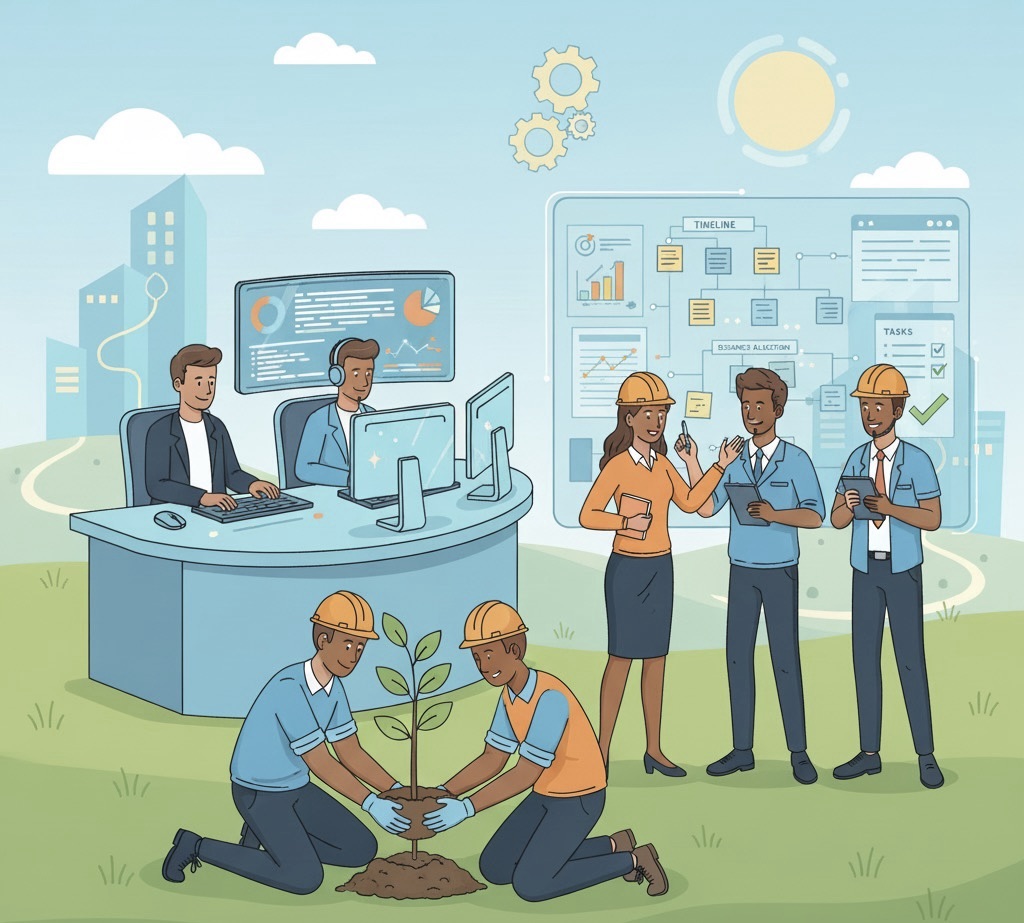
This image represents a futuristic, interconnected urban landscape, symbolizing the convergence of technology, sustainability, and advanced infrastructure that characterizes the rising industries discussed.
 Off the Clock
Leave a comment